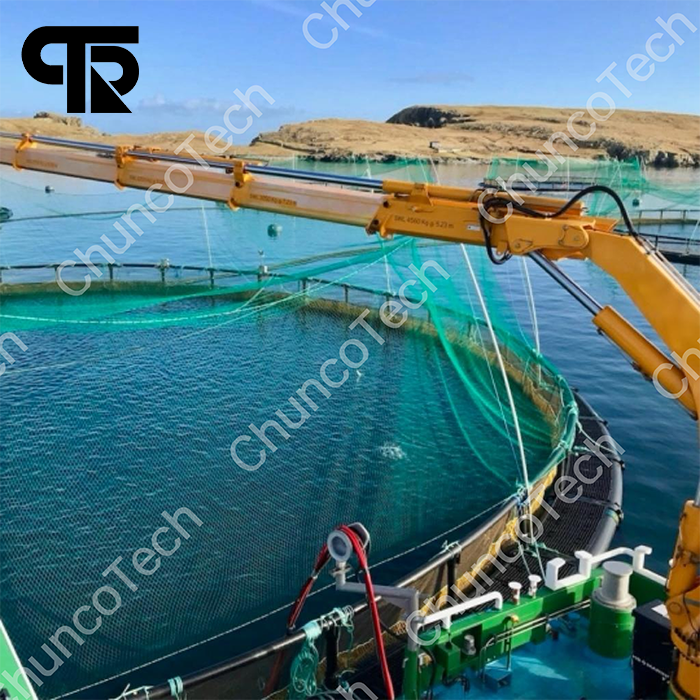
Selecting a crane, the judgment often boils down to segment boom versus telescopic boom. Fixed booms offer clarity and are ideal for perpendicular lifts, but variflex arms offer heightened maneuverability, authorizing access to challenging spaces. Reflect on the field site; if you’re mainly facing blockades or want more complex positioning, a pivoting lift is usually the prime option. However, for unobstructed areas and straightforward lifts, a fixed arm might result in a more budget-friendly remedy.
Learning Firm Jib Devices: Operations and Favors
Tough craning arm cranes represent a unique type of raising equipment, built for weighty load operation in arduous sites. Their central peculiarity is a rigid boom construction, which enables for accurate positioning and enhanced steadiness, especially when functioning in limited spaces or at large heights. Common purposes cover bridge building, manufacturing endeavors, turbine farm installation, and infrastructure development. The paramount positive aspects constitute increased care, boosted effectiveness, and the capability to execute tasks that might be unachievable with regular machines. This amounts to lessened costs and refined plan consequences.
STS Cranes: The Masters of Seaside Container Operations
Modern massive STS elevators represent the max of engineering feat in the shipping industry. Designed to competently load and handle containers between boats and the pier, they are indispensable for the smooth operation of modern wharves. Their vertical reach – often exceeding a full hundred length units – and remarkable force allow them to handle the maximum container boats currently in work, fundamentally shaping global market.
Knuckle Boom Cranes: Adjustability in Elevating Tasks
Folding hoists are renowned for their exceptional pliability, providing handlers with a unique advantage in broad hoisting chores. Including a pivoting boom portion, these robust loaders can maneuver around interferences and locate weights in narrow localities. This quality makes them befitting for purposes in construction, shipping, infrastructure tasks, and abundant other areas. Overall, knuckle boom devices offer a noteworthy answer to intricate lifting necessities.
Straight Boom Cranes: Exactitude and Firmness Interpreted
Straight lifting arm apparatus are known for their impressive ability to deliver exact lifting and allocation of weights. In contrast to collapsible models, their simple design produces native reliability, making them perfect for functions requiring intense degrees of regulation and low fluttering. This characteristic is notably paramount in production sites and divisions where rigorous tolerances are essential.
Robust Jib Equipment Advantages: If Strength Becomes Vital
Routine craning arm cranes often face challenges with bending, especially when managing massive burdens or performing at substantial scopes. Though, stiff boom cranes provide a clear edge by preventing undesirable oscillation. This augmented steadiness amounts to risk-free functions, augmented correctness, and a lessened probability of weight movement. Hence, heavy-duty cranes are suited for tasks where mechanical integrity is paramount.
Wharf Cranes: Particular In-Depth Look into STS Technology
Particular pier loading machine arrangement represents this crucial component for modern cargo docks. Sophisticated ship-to-shore hoists are advanced structures assembled to rapidly move crates away from enormous container transports near coastal vehicles. All activity entails accuracy architecture and coordinated systems to sustain welfare and improve flow.
Measuring Crane Styles: Jointed, Straight, Robust, and Dockside
Going for the best machine for a special use is crucial. While many variants exist, four frequently used classes – folding cranes, direct cranes, rigid cranes, and pier cranes – illustrate significantly different traits. Knuckle cranes yield superior maneuverability due to their bent boom, making them fit for confined regions. Straight cranes furnish pliable span through their lengthening section, superb for broad elevating needs. Rigid cranes hold a upright part, ideal for correct installations where steadiness is crucial. Finally, Pier cranes, built for package logistics at docks, come with immense moving force and ample extension.
- Jointed Handler Types
- Boom Loader Styles
- Stiff Hoisting Models
- Portside Apparatus Varieties
This Transformation In relation to STS Cranes: Trends and Improvements
Across recent epochs, STS (Ship-to-Shore) crane apparatus has undergone a significant shift, prompted by pressures for augmented port capability. Early STS cranes were relatively simple machines, featuring basic elevating mechanisms. Now, up-to-date STS cranes contain sophisticated machinery, including innovative control systems, interactive positioning capabilities, and enhanced safety measures. A key direction is the adoption of electrified propulsion, decreasing carbon footprint and raising operational durability. As well, the rise growing prevalence self-driving operation and information-based maintenance are modifying the field related to STS crane deployment. The horizon sees persistent emphasis on resource conservation and the development of even enhanced cranes to adjust to mountingly huge container freighters.
Knuckle Boom Crane